|
Surfboard stringers are commonly made from wood. Common stringer woods are basswood, balsa, and others. Stringer design, including the size of the stringer, the number of stringers, and the choice of materials is quite variable. This discussion won't cover all of the possibilities of stringer design considerations, but will only discuss the behavior of the wood material.
The basic construction of a surfboard uses the stringer as a primary beam, similar to the vertical member of an "I" beam. The stringer helps to transfer the bending load of the board between the upper and lower surfaces of the board composite. That is a complicated way of saying that the stringer acts like a stiffening component of the board. If you have tried to bend a piece of wood, it is normal for the wood to flex more easily in some directions. The stringer is oriented to be "hard" to bend or to be stiff. This is the same principal used in the design of structural "I" beams.
Wood has rather unusual properties in comparison to other materials like plastics and metals. Some of the various properties of wood will be discussed and some data will be provided to compare various types of woods. The properties to be covered are: Density, Modulus of Rupture, and the Modulus of Elasticity.
Almost there, but a few more comments on wood properties is useful. I will try to add more info on this later, but wood properties are fairly variable based on many factors such as the moisture content of the wood. Wood that is fresh cut is called "green". Most wood is aged and the moisture content of the wood then changes. Most wood properties are very dependent on the moisture content of the wood and much data is available for "green" wood and "12%" moisture content wood. In general, the 12% value is a standard moisture content of most commercially sold woods. However, the ACTUAL moisture content of the wood you may use will vary based on your supplier, how they stored it, how old it is, how well they controlled the aging, how you store it, if it gets exposed to high or low humidity etc... Most of this is essentially impossible to control, so the end results is that the moisture content of any particular wood will vary and the wood properties will also vary. Other factors which also affect wood properties are: grain direction, defects (knots, insect damage, cracks, etc...), local of forest, and numerous other factors.
This page has been re-organized because the content has gotton too large. Each of the various wood properties is grouped in a section. The list below provides links down the page to each section. All of the data on this page is from the US Department of Agriculture, report FPL-GTR-113, Forest Products Laboratory.
|
|
Density - The density is the mass of a substance divided by its volume. Denser materials weigh more for the same given volume. For example, steel is denser that styrofoam. Density is often defined in various units, such as pounds per cubic foot, kilograms per cubic meter and others. Another way to define density is called the specific gravity. This is the ratio of the density of the material in comparison to that of water. A specific gravity of 0.1 indicates that the density of the material is 0.1 times the density of water. Irrespective of the units, materials with higher densities weigh more for same given volume. In regards to a stringer, for the same stringer size, a more dense material will weigh more. The wood properties included in this section have units of density as specific gravity.
The table shows the referenced data sorted in order of increasing density. The lightest woods are first and as the list proceeds the wood gets more dense. The general trend of this data is that most woods have a specific gravity of 0.3 to 0.6 which is a factor of 2. Balsa is half again the lowest at about 0.16.
| Wood
Name |
Moisture content |
Specific Gravity |
| Balsa (Ochroma pyramidale) |
Green |
0.160 |
| Cedar, Northern White |
Green |
0.290 |
| Cedar, Northern white, CANADA |
Green |
0.300 |
| Cedar, Atlantic white |
Green |
0.310 |
| Cedar, Northern White |
12% |
0.310 |
| Cedar, Western red cedar |
Green |
0.310 |
| Cedar, Western red cedar,
CANADA |
Green |
0.310 |
| Basswood, American |
Green |
0.320 |
| Cedar, Atlantic white |
12% |
0.320 |
| Cedar, Western red cedar |
12% |
0.320 |
| Spruce, Engelmann |
Green |
0.330 |
| Spruce, White |
Green |
0.330 |
| Pine, Eastern white |
Green |
0.340 |
| Pine, Sugar |
Green |
0.340 |
| Redwood, young-growth |
Green |
0.340 |
| Cedar, Incense |
Green |
0.350 |
| Pine, Eastern white |
12% |
0.350 |
| Pine, Western white |
Green |
0.350 |
| Redwood, young-growth |
12% |
0.350 |
| Spruce, Engelmann |
12% |
0.350 |
| Spruce, Sitka, CANADA |
Green |
0.350 |
| Spruce, White, CANADA |
Green |
0.350 |
| Willow, Black |
Green |
0.360 |
| Pine, Eastern white, CANADA |
Green |
0.360 |
| Pine, Sugar |
12% |
0.360 |
| Pine, Western white, CANADA |
Green |
0.360 |
| Spruce, White |
12% |
0.360 |
| Basswood, American |
12% |
0.370 |
| Cedar, Incense |
12% |
0.370 |
| Spruce, Red |
Green |
0.370 |
| Spruce, Sitka |
Green |
0.370 |
| Pine, Lodgepole |
Green |
0.380 |
| Pine, Ponderosa |
Green |
0.380 |
| Pine, Western white |
12% |
0.380 |
| Redwood, old-growth |
Green |
0.380 |
| Spruce, Black |
Green |
0.380 |
| Spruce, Engelmann, CANADA |
Green |
0.380 |
| Spruce, Red, CANADA |
Green |
0.380 |
| Willow, Black |
12% |
0.390 |
| Cedar, Port-Orford |
Green |
0.390 |
| Pine, Red, CANADA |
Green |
0.390 |
| Pine, Jack |
Green |
0.400 |
| Pine, Lodgepole, CANADA |
Green |
0.400 |
| Pine, Ponderosa |
12% |
0.400 |
| Redwood, old-growth |
12% |
0.400 |
| Spruce, Red |
12% |
0.400 |
| Spruce, Sitka |
12% |
0.400 |
| Pine, Lodgepole |
12% |
0.410 |
| Pine, Red |
Green |
0.410 |
| Pine, Spruce |
Green |
0.410 |
| Spruce, Black, CANADA |
Green |
0.410 |
| Cedar, Yellow |
Green |
0.420 |
| Cedar, Yellow, CANADA |
Green |
0.420 |
| Pine, Jack, CANADA |
Green |
0.420 |
| Spruce, Black |
12% |
0.420 |
| Cedar, Port-Orford |
12% |
0.430 |
| Pine, Jack |
12% |
0.430 |
| Cedar, Eastern red cedar |
Green |
0.440 |
| Cedar, Yellow |
12% |
0.440 |
| Pine, Spruce |
12% |
0.440 |
| Pine, Virginia |
Green |
0.450 |
| Pine, Red |
12% |
0.460 |
| Pine, Sand |
Green |
0.460 |
| Cedar, Eastern red cedar |
12% |
0.470 |
| Pine, Loblolly |
Green |
0.470 |
| Pine, Pitch |
Green |
0.470 |
| Pine, Shortleaf |
Green |
0.470 |
| Pine, Sand |
12% |
0.480 |
| Pine, Virginia |
12% |
0.480 |
| Pine, Loblolly |
12% |
0.510 |
| Pine, Pond |
Green |
0.510 |
| Pine, Shortleaf |
12% |
0.510 |
| Pine, Pitch |
12% |
0.520 |
| Pine, Slash |
Green |
0.540 |
| Pine, Longleaf |
Green |
0.554 |
| Beech, American |
Green |
0.560 |
| Pine, Pond |
12% |
0.560 |
| Pine, Longleaf |
12% |
0.590 |
| Pine, Slash |
12% |
0.590 |
| Beech, American |
12% |
0.640 |
| Table
1 - Specific Gravity of Various Woods |
|
Impact Bending - This is a standard test where a specific weight is dropped
on a beam at varying heights until the beam fails or bends excessively (greater
than 6 inches). This test helps describe
the ability of a specific wood to absorb severe shocks. Larger values are greater height for failure,
so larger is stronger.
| Wood
Name |
Moisture content
|
Impact Bending
|
|
|
inches
|
| Balsa (Ochroma pyramidale) |
Green |
|
| Balsa (Ochroma pyramidale) |
12% |
|
| Basswood, American |
Green |
16
|
| Basswood, American |
12% |
16
|
| Beech, American |
Green |
43
|
| Beech, American |
12% |
41
|
| Willow, Black |
Green |
|
| Willow, Black |
12% |
|
| Cedar, Atlantic white |
Green |
18
|
| Cedar, Atlantic white |
12% |
13
|
| Cedar, Eastern red cedar |
Green |
35
|
| Cedar, Eastern red cedar |
12% |
22
|
| Cedar, Incense |
Green |
17
|
| Cedar, Incense |
12% |
17
|
| Cedar, Northern White |
Green |
15
|
| Cedar, Northern White |
12% |
12
|
| Cedar, Northern white, CANADA |
Green |
|
| Cedar, Northern white, CANADA |
12% |
|
| Cedar, Port-Orford |
Green |
21
|
| Cedar, Port-Orford |
12% |
28
|
| Cedar, Western red cedar |
Green |
17
|
| Cedar, Western red cedar |
12% |
17
|
| Cedar, Western red cedar,
CANADA |
Green |
|
| Cedar, Western red cedar,
CANADA |
12% |
|
| Cedar, Yellow |
Green |
27
|
| Cedar, Yellow |
12% |
29
|
| Cedar, Yellow, CANADA |
Green |
|
| Cedar, Yellow, CANADA |
12% |
|
| Pine, Eastern white |
Green |
17
|
| Pine, Eastern white |
12% |
18
|
| Pine, Eastern white, CANADA |
Green |
|
| Pine, Eastern white, CANADA |
12% |
|
| Pine, Jack |
Green |
26
|
| Pine, Jack |
12% |
27
|
| Pine, Jack, CANADA |
Green |
|
| Pine, Jack, CANADA |
12% |
|
| Pine, Loblolly |
Green |
30
|
| Pine, Loblolly |
12% |
30
|
| Pine, Lodgepole |
Green |
20
|
| Pine, Lodgepole |
12% |
20
|
| Pine, Lodgepole, CANADA |
Green |
|
| Pine, Lodgepole, CANADA |
12% |
|
| Pine, Longleaf |
Green |
35
|
| Pine, Longleaf |
12% |
34
|
| Pine, Pitch |
Green |
|
| Pine, Pitch |
12% |
|
| Pine, Pond |
Green |
|
| Pine, Pond |
12% |
|
| Pine, Ponderosa |
Green |
21
|
| Pine, Ponderosa |
12% |
19
|
| Pine, Red |
Green |
26
|
| Pine, Red |
12% |
26
|
| Pine, Red, CANADA |
Green |
|
| Pine, Red, CANADA |
12% |
|
| Pine, Sand |
Green |
|
| Pine, Sand |
12% |
|
| Pine, Shortleaf |
Green |
30
|
| Pine, Shortleaf |
12% |
33
|
| Pine, Slash |
Green |
|
| Pine, Slash |
12% |
|
| Pine, Spruce |
Green |
|
| Pine, Spruce |
12% |
|
| Pine, Sugar |
Green |
17
|
| Pine, Sugar |
12% |
18
|
| Pine, Virginia |
Green |
34
|
| Pine, Virginia |
12% |
32
|
| Pine, Western white |
Green |
19
|
| Pine, Western white |
12% |
23
|
| Pine, Western white, CANADA |
Green |
|
| Pine, Western white, CANADA |
12% |
|
| Redwood, old-growth |
Green |
21
|
| Redwood, old-growth |
12% |
19
|
| Redwood, young-growth |
Green |
16
|
| Redwood, young-growth |
12% |
15
|
| Spruce, Black |
Green |
24
|
| Spruce, Black |
12% |
23
|
| Spruce, Black, CANADA |
Green |
|
| Spruce, Black, CANADA |
12% |
|
| Spruce, Engelmann |
Green |
16
|
| Spruce, Engelmann |
12% |
18
|
| Spruce, Engelmann, CANADA |
Green |
|
| Spruce, Engelmann, CANADA |
12% |
|
| Spruce, Red |
Green |
18
|
| Spruce, Red |
12% |
25
|
| Spruce, Red, CANADA |
Green |
|
| Spruce, Red, CANADA |
12% |
|
| Spruce, Sitka |
Green |
24
|
| Spruce, Sitka |
12% |
25
|
| Spruce, Sitka, CANADA |
Green |
|
| Spruce, Sitka, CANADA |
12% |
|
| Spruce, White |
Green |
22
|
| Spruce, White |
12% |
20
|
| Spruce, White, CANADA |
Green |
|
| Spruce, White, CANADA |
12% |
|
|
|
Modulus of Elasticity - This parameter helps define how "stiff" a material is. Materials which are very stiff would have a large Modulus of Elasticity. Steel have a much high Modulus of Elasticity than wood, so for the same dimensions, a part made from steel will be much stiffer than one made from wood. In terms of whether stiff is desirable, this is not necessarily clear. A very stiff material is often also very strong, so a stiff material may be better for strength. For some structures, failures can be mitigated if the structure bends a little, so some flexure may be desirable. In the composite structure of a surfboard, the flexure of the board can also create undesirable loads on the composite sheets covering the foam core, so a stiff stringer could reduce overall flexure of the board and thereby reduce deflections of the glassing thereby reducing the tendency of the glassing to fail. OR to help make it more confusing, functionally one may WANT the board to flex slightly for a specific board handling behavior, in which case the actual flexure is some specific value, not to loose, not too stiff. The desired stiffness of a wood material is therefore less easy to define as good or bad, but it is highly likely to vary from wood to wood. For at least uniformity of stiffness, it would be good to understand how this parameter varies. In general, higher values of the Modulus of Elasticity means a material which is stiffer.
The data table shows the variation in Modulus of Elasticity from the most compliant to the stiffest. One sees a range of 0.5 to 2.0 (in units of millions of psi) or a range of 4 times. Again, there is a trend for moisture content where aged 12% moisture wood is stiffer than green wood.
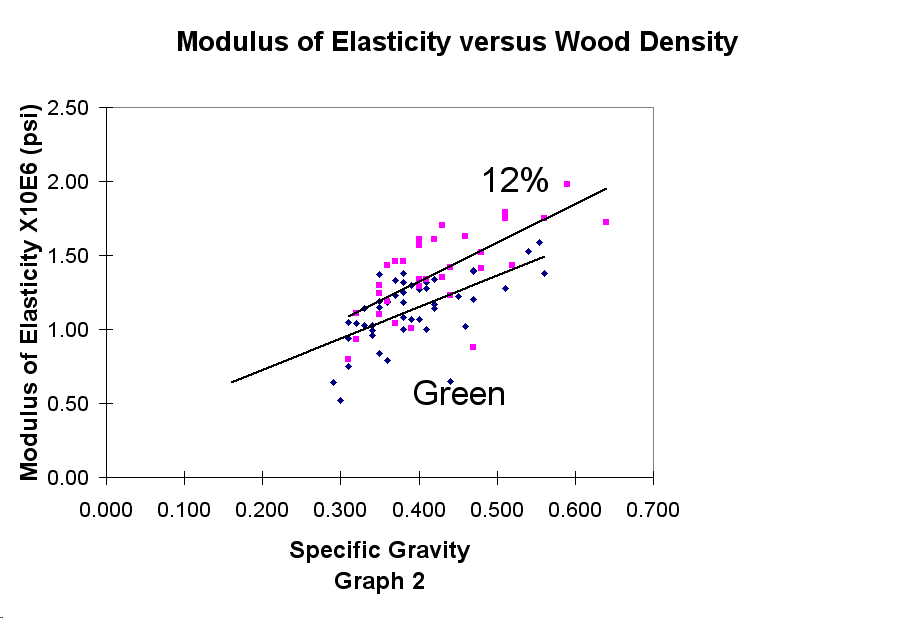
The associated graph shows the Modulus of Elasticity versus wood density with the same groupings for green and aged wood. The data scatter is more severe but a simple trend of denser wood is more stiff and aging increases stiffness is seen.
| Wood
Name |
Moisture content |
Modulus of Elasticity |
|
|
(X 10E6 psi) |
| Balsa (Ochroma pyramidale) |
12% |
0.49 |
| Cedar, Northern white, CANADA |
Green |
0.52 |
| Cedar, Northern white, CANADA |
12% |
0.63 |
| Cedar, Northern White |
Green |
0.64 |
| Cedar, Eastern red cedar |
Green |
0.65 |
| Cedar, Atlantic white |
Green |
0.75 |
| Willow, Black |
Green |
0.79 |
| Cedar, Northern White |
12% |
0.80 |
| Cedar, Incense |
Green |
0.84 |
| Cedar, Eastern red cedar |
12% |
0.88 |
| Cedar, Atlantic white |
12% |
0.93 |
| Cedar, Western red cedar |
Green |
0.94 |
| Redwood, young-growth |
Green |
0.96 |
| Pine, Eastern white |
Green |
0.99 |
| Pine, Spruce |
Green |
1.00 |
| Pine, Ponderosa |
Green |
1.00 |
| Willow, Black |
12% |
1.01 |
| Pine, Sand |
Green |
1.02 |
| Pine, Sugar |
Green |
1.03 |
| Spruce, Engelmann |
Green |
1.03 |
| Cedar, Incense |
12% |
1.04 |
| Basswood, American |
Green |
1.04 |
| Cedar, Western red cedar,
CANADA |
Green |
1.05 |
| Pine, Jack |
Green |
1.07 |
| Pine, Red, CANADA |
Green |
1.07 |
| Pine, Lodgepole |
Green |
1.08 |
| Redwood, young-growth |
12% |
1.10 |
| Cedar, Western red cedar |
12% |
1.11 |
| Cedar, Yellow |
Green |
1.14 |
| Spruce, White |
Green |
1.14 |
| Spruce, White, CANADA |
Green |
1.15 |
| Pine, Jack, CANADA |
Green |
1.17 |
| Redwood, old-growth |
Green |
1.18 |
| Pine, Eastern white, CANADA |
Green |
1.18 |
| Pine, Sugar |
12% |
1.19 |
| Cedar, Western red cedar,
CANADA |
12% |
1.19 |
| Pine, Western white, CANADA |
Green |
1.19 |
| Pine, Western white |
Green |
1.19 |
| Pine, Pitch |
Green |
1.20 |
| Pine, Virginia |
Green |
1.22 |
| Pine, Spruce |
12% |
1.23 |
| Spruce, Sitka |
Green |
1.23 |
| Pine, Eastern white |
12% |
1.24 |
| Spruce, Engelmann, CANADA |
Green |
1.25 |
| Pine, Lodgepole, CANADA |
Green |
1.27 |
| Pine, Pond |
Green |
1.28 |
| Pine, Red |
Green |
1.28 |
| Pine, Ponderosa |
12% |
1.29 |
| Spruce, Engelmann |
12% |
1.30 |
| Cedar, Port-Orford |
Green |
1.30 |
| Spruce, Red, CANADA |
Green |
1.32 |
| Spruce, Black, CANADA |
Green |
1.32 |
| Spruce, Red |
Green |
1.33 |
| Redwood, old-growth |
12% |
1.34 |
| Pine, Lodgepole |
12% |
1.34 |
| Cedar, Yellow, CANADA |
Green |
1.34 |
| Pine, Jack |
12% |
1.35 |
| Pine, Eastern white, CANADA |
12% |
1.36 |
| Spruce, Sitka, CANADA |
Green |
1.37 |
| Pine, Red, CANADA |
12% |
1.38 |
| Beech, American |
Green |
1.38 |
| Spruce, Black |
Green |
1.38 |
| Pine, Shortleaf |
Green |
1.39 |
| Pine, Loblolly |
Green |
1.40 |
| Pine, Sand |
12% |
1.41 |
| Cedar, Yellow |
12% |
1.42 |
| Pine, Pitch |
12% |
1.43 |
| Spruce, White |
12% |
1.43 |
| Spruce, White, CANADA |
12% |
1.45 |
| Pine, Western white |
12% |
1.46 |
| Pine, Western white, CANADA |
12% |
1.46 |
| Basswood, American |
12% |
1.46 |
| Pine, Jack, CANADA |
12% |
1.48 |
| Pine, Virginia |
12% |
1.52 |
| Spruce, Black, CANADA |
12% |
1.52 |
| Pine, Slash |
Green |
1.53 |
| Spruce, Engelmann, CANADA |
12% |
1.55 |
| Spruce, Sitka |
12% |
1.57 |
| Pine, Lodgepole, CANADA |
12% |
1.58 |
| Cedar, Yellow, CANADA |
12% |
1.59 |
| Pine, Longleaf |
Green |
1.59 |
| Spruce, Red, CANADA |
12% |
1.60 |
| Spruce, Red |
12% |
1.61 |
| Spruce, Black |
12% |
1.61 |
| Pine, Red |
12% |
1.63 |
| Spruce, Sitka, CANADA |
12% |
1.63 |
| Cedar, Port-Orford |
12% |
1.70 |
| Beech, American |
12% |
1.72 |
| Pine, Shortleaf |
12% |
1.75 |
| Pine, Pond |
12% |
1.75 |
| Pine, Loblolly |
12% |
1.79 |
| Pine, Slash |
12% |
1.98 |
| Pine, Longleaf |
12% |
1.98 |
| Table
3 - Modulus of Elasticity of Various Woods |
|
Modulus of Rupture - Most materials have some way to determine how strong they are, such that after they are loaded or deflected by a certain amount, one knows if they will fail. Most materials in the world that are used to make things have roughly the same material strength in any direction a load is applied to them. This is property of have uniform mechanical properties in any direction is called isotropic. Isotropic materials are things like metals and plastics. Materials which have a fibrous nature, like cloth, rope, wood, fiberglass or graphite composites do NOT have strength that is uniform in all directions. For example, a rope is very strong when you pull on it (this is a tensile load), but crumples when pushed as in the "pushing on a rope". Rope is very good at tensile loads but cannot carry compressive (i.e. pushing) loads. A metal pipe however would do nicely in either pulling or pushing. Back to wood. Wood is not isotropic it is ANISOTROPIC which means the strength is different in different directions of applied load, similar to rope. Determining the strength of wood is complicated by this feature because the strength of wood depends on the how the load is applied in relation to the direction of the grain of the wood. To help standardize the strength of wood, there is a means of testing wood under a controlled load until the wood fails. This creates a parameter called the Modulus of Rupture. One could assume for example that when wood fails, that the wood has exceeded the value of the Modulus of Rupture. Rather long winded, but what you take from this is: The higher the value of the Modulus of Rupture, the stronger the wood. In general, one would think that one wants wood with a high Modulus of Rupture for a stringer.
The data table shows the reference data sorted for Modulus of Rupture starting from the strongest to the weakest. One sees a spread in strength of about a factor of 5 from 16,000 to 3000 psi. Also note that most of the high strength woods are 12% moisture and not green, so wood improves in strength from green to an aged moisture content of 12%.
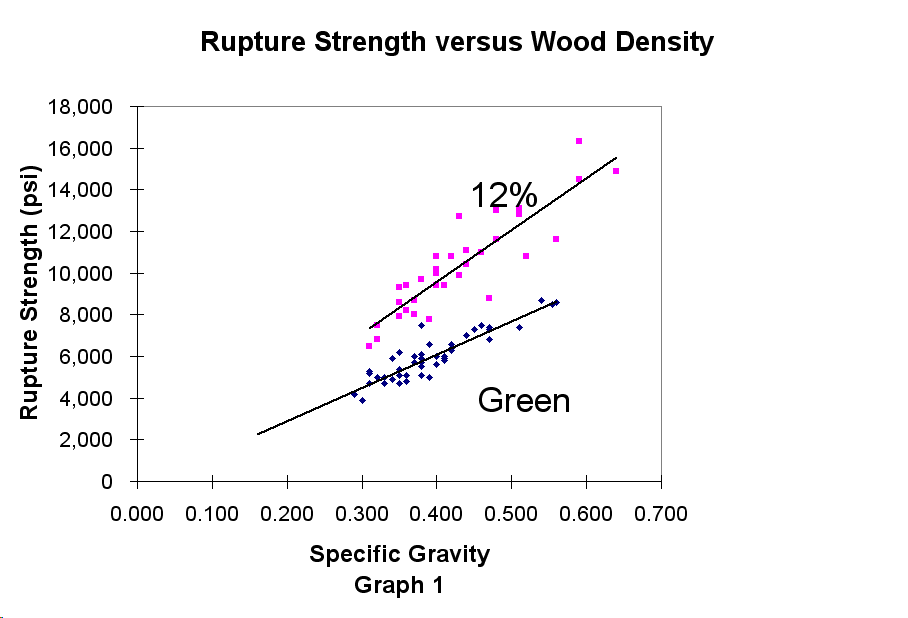
After reviewing this data, I saw a trends which was interesting and is best seen in a graph. The graph shows the Modulus of Rupture versus the wood density for both green and 12% moisture (the top set of data points are 12% moisture, the lower set of data are the green data points). This shows that wood strength increases as the wood density increases for both the green and aged wood. It also shows that a dramatic change in wood strength occurs from aging, AND that the strongest woods when green are barely stronger than a well aged weak wood. Lesson learned: Make sure your wood is not green and has been aged properly.
| Wood
Name |
Moisture content |
Modulus of Rupture |
|
|
(psi) |
| Pine, Slash |
12% |
16300 |
| Beech, American |
12% |
14900 |
| Pine, Longleaf |
12% |
14500 |
| Pine, Shortleaf |
12% |
13100 |
| Pine, Virginia |
12% |
13000 |
| Pine, Loblolly |
12% |
12800 |
| Cedar, Port-Orford |
12% |
12700 |
| Pine, Sand |
12% |
11600 |
| Pine, Pond |
12% |
11600 |
| Cedar, Yellow, CANADA |
12% |
11600 |
| Spruce, Black, CANADA |
12% |
11400 |
| Pine, Jack, CANADA |
12% |
11300 |
| Cedar, Yellow |
12% |
11100 |
| Pine, Lodgepole, CANADA |
12% |
11100 |
| Pine, Red |
12% |
11000 |
| Spruce, Red |
12% |
10800 |
| Spruce, Black |
12% |
10800 |
| Pine, Pitch |
12% |
10800 |
| Pine, Spruce |
12% |
10400 |
| Spruce, Red, CANADA |
12% |
10300 |
| Spruce, Sitka |
12% |
10200 |
| Pine, Red, CANADA |
12% |
10100 |
| Spruce, Engelmann, CANADA |
12% |
10100 |
| Spruce, Sitka, CANADA |
12% |
10100 |
| Redwood, old-growth |
12% |
10000 |
| Pine, Jack |
12% |
9900 |
| Pine, Western white |
12% |
9700 |
| Pine, Eastern white, CANADA |
12% |
9500 |
| Spruce, White |
12% |
9400 |
| Pine, Ponderosa |
12% |
9400 |
| Pine, Lodgepole |
12% |
9400 |
| Spruce, Engelmann |
12% |
9300 |
| Pine, Western white, CANADA |
12% |
9300 |
| Spruce, White, CANADA |
12% |
9100 |
| Cedar, Eastern red cedar |
12% |
8800 |
| Basswood, American |
12% |
8700 |
| Pine, Slash |
Green |
8700 |
| Pine, Eastern white |
12% |
8600 |
| Beech, American |
Green |
8600 |
| Pine, Longleaf |
Green |
8500 |
| Pine, Sugar |
12% |
8200 |
| Cedar, Incense |
12% |
8000 |
| Redwood, young-growth |
12% |
7900 |
| Willow, Black |
12% |
7800 |
| Cedar, Western red cedar,
CANADA |
12% |
7800 |
| Cedar, Western red cedar |
12% |
7500 |
| Redwood, old-growth |
Green |
7500 |
| Pine, Sand |
Green |
7500 |
| Pine, Shortleaf |
Green |
7400 |
| Pine, Pond |
Green |
7400 |
| Pine, Virginia |
Green |
7300 |
| Pine, Loblolly |
Green |
7300 |
| Cedar, Eastern red cedar |
Green |
7000 |
| Cedar, Atlantic white |
12% |
6800 |
| Pine, Pitch |
Green |
6800 |
| Cedar, Port-Orford |
Green |
6600 |
| Cedar, Yellow, CANADA |
Green |
6600 |
| Cedar, Northern White |
12% |
6500 |
| Cedar, Yellow |
Green |
6400 |
| Pine, Jack, CANADA |
Green |
6300 |
| Cedar, Incense |
Green |
6200 |
| Spruce, Black |
Green |
6100 |
| Cedar, Northern white, CANADA |
12% |
6100 |
| Spruce, Red |
Green |
6000 |
| Pine, Jack |
Green |
6000 |
| Pine, Spruce |
Green |
6000 |
| Redwood, young-growth |
Green |
5900 |
| Spruce, Red, CANADA |
Green |
5900 |
| Spruce, Black, CANADA |
Green |
5900 |
| Pine, Red |
Green |
5800 |
| Spruce, Sitka |
Green |
5700 |
| Spruce, Engelmann, CANADA |
Green |
5700 |
| Pine, Lodgepole, CANADA |
Green |
5600 |
| Pine, Lodgepole |
Green |
5500 |
| Spruce, Sitka, CANADA |
Green |
5400 |
| Cedar, Western red cedar,
CANADA |
Green |
5300 |
| Cedar, Western red cedar |
Green |
5200 |
| Spruce, White, CANADA |
Green |
5100 |
| Pine, Eastern white, CANADA |
Green |
5100 |
| Pine, Ponderosa |
Green |
5100 |
| Basswood, American |
Green |
5000 |
| Spruce, White |
Green |
5000 |
| Pine, Red, CANADA |
Green |
5000 |
| Pine, Eastern white |
Green |
4900 |
| Pine, Sugar |
Green |
4900 |
| Willow, Black |
Green |
4800 |
| Pine, Western white, CANADA |
Green |
4800 |
| Cedar, Atlantic white |
Green |
4700 |
| Spruce, Engelmann |
Green |
4700 |
| Pine, Western white |
Green |
4700 |
| Cedar, Northern White |
Green |
4200 |
| Cedar, Northern white, CANADA |
Green |
3900 |
| Balsa (Ochroma pyramidale) |
12% |
3140 |
| Balsa (Ochroma pyramidale) |
Green |
|
| Table
2 - Modulus of Rupture of Various Woods |
|
|
|
Orthotropic Behavior
of Wood - Orthotropic means that the properties of wood vary depending
on the direction of grain. This should
be obvious. Wood bends more readily in
the direction perpendicular to the grain and splits more readily in the direction of the
grain. Many other common materials, like
metals and plastics have properties which are not dependent on some fixed
orientation, or if there is an orientation bias, it is very weak. These kinds of materials are called
anisotropic. Suffice to say, wood has
properties that vary with the grain orientation and this is generally termed
orthotropic.
Wood has three characteristic directions: the direction of
the grain (called longitudinal), perpendicular to the growth ring (called
radial), and tangential to the growth ring (called tangential). The material properties are variant in all of
these three directions. When wood is cut
into a nice rectangular form, normally with the grain parallel to the lumber
major axis, the directional behavior of the wood remains, even if it is not
obvious from the lumber what the growth ring orientation is.
As a result to fully understand the elastic mechanical
properties of wood (how it bends and deforms elastically), one needs 12 elastic
properties: 3 moduli of elasticity (one for each direction), 3 moduli of
rigidity (one for each direction), and 6 Poisson’s ratio’s. The moduli of elasticity are parameters that define how "stiff" or elastic a material is. The modulus of rigidity is similar but is more often used to characterize how "stiff" a material is when it is twisted or put into a state of torsion. Poisson's ratio defines how a material deforms when stressed.
The longitudinal properties tend to be the most commonly
used. A simple table below shows how the
moduli of elasticity and rigidity vary based on the grain direction by dividing
each parameter by the longitudinal modulus of elasticity. One can use the longitudinal modulus of
elasticity to find the radial and tangential moduli of elasticity and all three
moduli of rigidity (longitudinal, radial, and tangential) using this data. One can see that the non-longitudinal
orthotropic material properties are quite variable between wood species
(compare Balsa and Sugar Pine).
El - Modulus of Elasticity, Longitudinal direction Er - Modulus of Elasticity, Radial direction Et - Modulus of Elasticity, Tangential direction Glr - Modulus of Rigidity, Longitudinal-radial - Glr - Modulus of Rigidity, Longitudinal-tangential
- Grt - Modulus of Rigidity, Radial-tangential
| Wood |
Et/El
|
Er/El
|
Glr/El
|
Glt/El
|
Grt/El
|
| Balsa |
0.015
|
0.046
|
0.054
|
0.037
|
0.005
|
| Basswood |
0.027
|
0.066
|
0.056
|
0.046
|
|
| Cedar, Northern White |
0.081
|
0.183
|
0.210
|
0.187
|
0.015
|
| Cedar, Western red cedar |
0.055
|
0.081
|
0.087
|
0.086
|
0.005
|
| Pine, Loblolly |
0.078
|
0.113
|
0.082
|
0.081
|
0.013
|
| Pine, Lodgepol |
0.068
|
0.102
|
0.049
|
0.046
|
0.005
|
| Pine, Longleaf |
0.055
|
0.102
|
0.071
|
0.060
|
0.012
|
| Pine, Pond |
0.041
|
0.071
|
0.050
|
0.045
|
0.009
|
| Pine, Ponderosa |
0.083
|
0.122
|
0.138
|
0.115
|
0.017
|
| Pine, Red |
0.044
|
0.088
|
0.096
|
0.081
|
0.011
|
| Pine, Slash |
0.045
|
0.074
|
0.055
|
0.053
|
0.010
|
| Pine, Sugar |
0.087
|
0.131
|
0.124
|
0.113
|
0.019
|
| Pine, Western white |
0.038
|
0.078
|
0.052
|
0.048
|
0.005
|
| Redwood |
0.089
|
0.087
|
0.066
|
0.077
|
0.011
|
| Spruce, Engelmann |
0.059
|
0.128
|
0.124
|
0.120
|
0.010
|
| Spruce, Sitka |
0.043
|
0.078
|
0.064
|
0.061
|
0.003
|
|
|
Poisson's Ratio (or
as I like to remember it, Mr. Fish’s ratio, Poisson was a Frenchman and his
name is “Fish” when translated into English).
I like to think of Poisson’s ratio as the amount of bulging
a material experiences when squished.
More technically it is the ratio of tranverse to axial deformation. For example, you compressed a solid cylinder
along is primary axis (thru the centerline of the cylinder). The cylinder shrinks and also bulges outward in
the radial direction. The ratio of the
radial deformation divided by the axial deformation is Poisson’s ratio. For an anisotropic material, Poisson’s ratio
is constant for any orientation. So if
laid the cylinder on it’s side and compressed it, the ratio of the radial to
axial deformation would stay the same, that is, constant. That is NOT true for orthotropic materials
like wood. In the case of wood, the
deformations are very much dependent on what orientation you squish the wood
and the resultant induced deformation is also dependent. This creates SIX (6) Poisson ratios for a 3
axis orthotropic material like wood:
- Longitudinal to radial (L-R)
- Radial to longitudinal (R-L)
- Longitudinal to tangential (L-T)
- Tangential to longitudinal (T-L)
- Radial to tangential (R-T)
- Tangential to radial (T-R)
| Wood |
L-R
|
L-T
|
R-T
|
T-R
|
R-L
|
T-L
|
| Balsa |
0.229
|
0.488
|
0.665
|
0.231
|
0.018
|
0.009
|
| Basswood |
0.364
|
0.406
|
0.912
|
0.345
|
0.034
|
0.022
|
| Cedar, Northern White |
0.337
|
0.340
|
0.458
|
0.345
|
|
|
| Cedar, Western red cedar |
0.378
|
0.296
|
0.484
|
0.403
|
|
|
| Pine, Loblolly |
0.328
|
0.292
|
0.382
|
0.362
|
|
|
| Pine, Lodgepole |
0.316
|
0.347
|
0.469
|
0.381
|
|
|
| Pine, Longleaf |
0.332
|
0.365
|
0.384
|
0.342
|
|
|
| Pine, Pond |
0.280
|
0.364
|
0.389
|
0.320
|
|
|
| Pine, Ponderosa |
0.337
|
0.400
|
0.426
|
0.359
|
|
|
| Pine, Red |
0.347
|
0.315
|
0.408
|
0.308
|
|
|
| Pine, Slash |
0.392
|
0.444
|
0.447
|
0.387
|
|
|
| Pine, Sugar |
0.356
|
0.349
|
0.428
|
0.358
|
|
|
| Pine, Western white |
0.329
|
0.344
|
0.410
|
0.334
|
|
|
| Redwood |
0.360
|
0.346
|
0.373
|
0.400
|
|
|
| Spruce, Engelmann |
0.422
|
0.462
|
0.530
|
0.255
|
0.083
|
0.058
|
| Spruce, Sitka |
0.372
|
0.467
|
0.435
|
0.245
|
0.040
|
0.025
|
|
|
Derived Parameter - Specific Stiffness - This is a parameter that I created using the data in this report. The "Specific Stiffness" is the Modulus of Elasticity divided by the Specific Gravity. This shows how stiff the wood is when "normalized" by its mass. So "pound for pound" a wood with a higher specific stiffness is more stiff. Light weight stiff woods have high specific stiffness. Heavy flimsy woods have low specific stiffness. In general, one would probably want woods with a high specific stiffness because that means one gets the desired stiffness with less wood and hence a lighter structure. There may be other factors as well, but this may be useful to look at.
The data table shows the specific stiffness and has a range of 1.5 to 4.0 or slightly greater than 2 times. This has less clear data and it is interesting to see than variants of Cedar are at both ends of the extreme.
| Wood
Name |
Moisture content |
"Specific Stiffness"
psi/SG |
| Cedar, Eastern red cedar |
Green |
1.48 |
| Cedar, Northern white, CANADA |
Green |
1.73 |
| Cedar, Eastern red cedar |
12% |
1.87 |
| Willow, Black |
Green |
2.19 |
| Cedar, Northern White |
Green |
2.21 |
| Pine, Sand |
Green |
2.22 |
| Cedar, Incense |
Green |
2.40 |
| Cedar, Atlantic white |
Green |
2.42 |
| Pine, Spruce |
Green |
2.44 |
| Beech, American |
Green |
2.46 |
| Pine, Pond |
Green |
2.51 |
| Pine, Pitch |
Green |
2.55 |
| Cedar, Northern White |
12% |
2.58 |
| Willow, Black |
12% |
2.59 |
| Pine, Ponderosa |
Green |
2.63 |
| Pine, Jack |
Green |
2.68 |
| Beech, American |
12% |
2.69 |
| Pine, Virginia |
Green |
2.71 |
| Cedar, Yellow |
Green |
2.71 |
| Pine, Red, CANADA |
Green |
2.74 |
| Pine, Pitch |
12% |
2.75 |
| Pine, Jack, CANADA |
Green |
2.79 |
| Pine, Spruce |
12% |
2.80 |
| Cedar, Incense |
12% |
2.81 |
| Redwood, young-growth |
Green |
2.82 |
| Pine, Slash |
Green |
2.83 |
| Pine, Lodgepole |
Green |
2.84 |
| Pine, Longleaf |
Green |
2.87 |
| Cedar, Atlantic white |
12% |
2.91 |
| Pine, Eastern white |
Green |
2.91 |
| Pine, Sand |
12% |
2.94 |
| Pine, Shortleaf |
Green |
2.96 |
| Pine, Loblolly |
Green |
2.98 |
| Pine, Sugar |
Green |
3.03 |
| Cedar, Western red cedar |
Green |
3.03 |
| Redwood, old-growth |
Green |
3.11 |
| Spruce, Engelmann |
Green |
3.12 |
| Pine, Red |
Green |
3.12 |
| Pine, Pond |
12% |
3.13 |
| Pine, Jack |
12% |
3.14 |
| Redwood, young-growth |
12% |
3.14 |
| Pine, Virginia |
12% |
3.17 |
| Pine, Lodgepole, CANADA |
Green |
3.18 |
| Cedar, Yellow, CANADA |
Green |
3.19 |
| Spruce, Black, CANADA |
Green |
3.22 |
| Pine, Ponderosa |
12% |
3.23 |
| Cedar, Yellow |
12% |
3.23 |
| Basswood, American |
Green |
3.25 |
| Pine, Lodgepole |
12% |
3.27 |
| Pine, Eastern white, CANADA |
Green |
3.28 |
| Spruce, White, CANADA |
Green |
3.29 |
| Spruce, Engelmann, CANADA |
Green |
3.29 |
| Pine, Western white, CANADA |
Green |
3.31 |
| Pine, Sugar |
12% |
3.31 |
| Spruce, Sitka |
Green |
3.32 |
| Cedar, Port-Orford |
Green |
3.33 |
| Redwood, old-growth |
12% |
3.35 |
| Pine, Longleaf |
12% |
3.36 |
| Pine, Slash |
12% |
3.36 |
| Cedar, Western red cedar,
CANADA |
Green |
3.39 |
| Pine, Western white |
Green |
3.40 |
| Pine, Shortleaf |
12% |
3.43 |
| Spruce, White |
Green |
3.45 |
| Cedar, Western red cedar |
12% |
3.47 |
| Spruce, Red, CANADA |
Green |
3.47 |
| Pine, Loblolly |
12% |
3.51 |
| Pine, Eastern white |
12% |
3.54 |
| Pine, Red |
12% |
3.54 |
| Spruce, Red |
Green |
3.59 |
| Spruce, Black |
Green |
3.63 |
| Spruce, Engelmann |
12% |
3.71 |
| Spruce, Black |
12% |
3.83 |
| Pine, Western white |
12% |
3.84 |
| Spruce, Sitka, CANADA |
Green |
3.91 |
| Spruce, Sitka |
12% |
3.93 |
| Basswood, American |
12% |
3.95 |
| Cedar, Port-Orford |
12% |
3.95 |
| Spruce, White |
12% |
3.97 |
| Spruce, Red |
12% |
4.03 |
| Table
4- "Specific Stiffness" of Various Woods |
|
|
|
Derived Parameter - Specific Strength - Just like above , this is another parameter that I created using the data in this report. The "Specific Strength" is the Modulus of Rupture divided by the Specific Gravity. This shows how strong the wood is normalized by its mass. So "pound for pound" a wood with a higher specific strength is stronger. Light weight strong woods have high specific strength. Heavy weak woods have low specific strength. In general one would want woods with a high specific strength because that means one gets the desired strength with less wood and hence a lighter structure.
The data table shows the specific strength and has a range of 13,000 to 30,000 or roughly a range of 2 times. The strongest wood being Cedar, Port-Orford, 12% moisture.
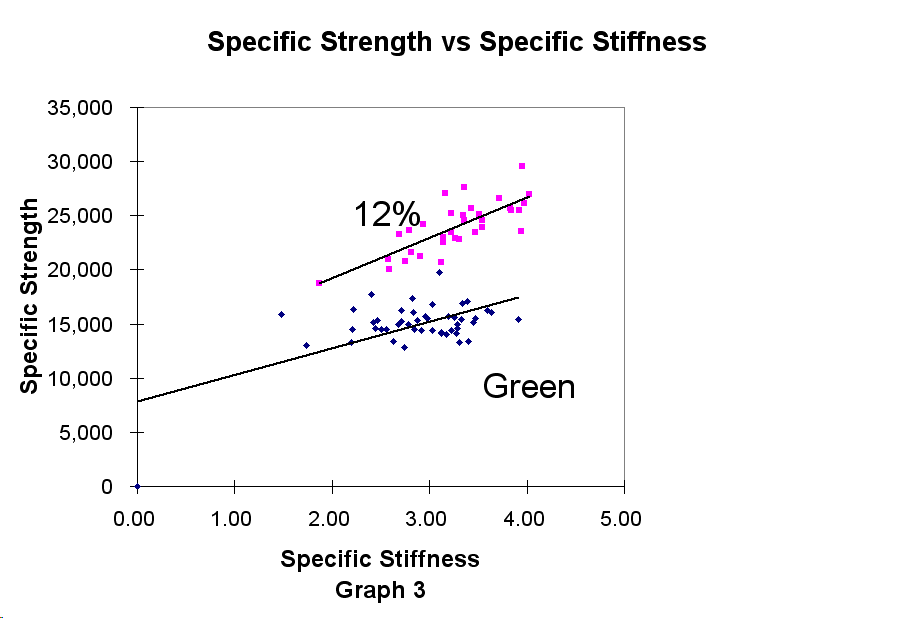
Another graph shows a mapping of the specific strength versus the specific stiffness. One sees that when wood is green the specific strength for all woods is essentially the same, whereas when wood ages, stronger woods are stiffer.
| Wood
Name |
Moisture content |
"Specific Strength"
psi/SG |
| Balsa (Ochroma pyramidale) |
Green |
0 |
| Pine, Red, CANADA |
Green |
12,821 |
| Cedar, Northern white, CANADA |
Green |
13,000 |
| Willow, Black |
Green |
13,333 |
| Pine, Western white, CANADA |
Green |
13,333 |
| Pine, Ponderosa |
Green |
13,421 |
| Pine, Western white |
Green |
13,429 |
| Pine, Lodgepole, CANADA |
Green |
14,000 |
| Pine, Red |
Green |
14,146 |
| Pine, Eastern white, CANADA |
Green |
14,167 |
| Spruce, Engelmann |
Green |
14,242 |
| Spruce, Black, CANADA |
Green |
14,390 |
| Pine, Eastern white |
Green |
14,412 |
| Pine, Sugar |
Green |
14,412 |
| Pine, Pitch |
Green |
14,468 |
| Pine, Lodgepole |
Green |
14,474 |
| Cedar, Northern White |
Green |
14,483 |
| Pine, Pond |
Green |
14,510 |
| Spruce, White, CANADA |
Green |
14,571 |
| Pine, Spruce |
Green |
14,634 |
| Pine, Jack |
Green |
15,000 |
| Pine, Jack, CANADA |
Green |
15,000 |
| Spruce, Engelmann, CANADA |
Green |
15,000 |
| Spruce, White |
Green |
15,152 |
| Cedar, Atlantic white |
Green |
15,161 |
| Cedar, Yellow |
Green |
15,238 |
| Pine, Longleaf |
Green |
15,343 |
| Beech, American |
Green |
15,357 |
| Spruce, Sitka |
Green |
15,405 |
| Spruce, Sitka, CANADA |
Green |
15,429 |
| Spruce, Red, CANADA |
Green |
15,526 |
| Pine, Loblolly |
Green |
15,532 |
| Basswood, American |
Green |
15,625 |
| Cedar, Yellow, CANADA |
Green |
15,714 |
| Pine, Shortleaf |
Green |
15,745 |
| Cedar, Eastern red cedar |
Green |
15,909 |
| Spruce, Black |
Green |
16,053 |
| Pine, Slash |
Green |
16,111 |
| Spruce, Red |
Green |
16,216 |
| Pine, Virginia |
Green |
16,222 |
| Pine, Sand |
Green |
16,304 |
| Cedar, Western red cedar |
Green |
16,774 |
| Cedar, Port-Orford |
Green |
16,923 |
| Cedar, Western red cedar,
CANADA |
Green |
17,097 |
| Redwood, young-growth |
Green |
17,353 |
| Cedar, Incense |
Green |
17,714 |
| Cedar, Eastern red cedar |
12% |
18,723 |
| Redwood, old-growth |
Green |
19,737 |
| Willow, Black |
12% |
20,000 |
| Pine, Pond |
12% |
20,714 |
| Pine, Pitch |
12% |
20,769 |
| Cedar, Northern White |
12% |
20,968 |
| Cedar, Atlantic white |
12% |
21,250 |
| Cedar, Incense |
12% |
21,622 |
| Redwood, young-growth |
12% |
22,571 |
| Pine, Sugar |
12% |
22,778 |
| Pine, Lodgepole |
12% |
22,927 |
| Pine, Jack |
12% |
23,023 |
| Beech, American |
12% |
23,281 |
| Cedar, Western red cedar |
12% |
23,438 |
| Pine, Ponderosa |
12% |
23,500 |
| Basswood, American |
12% |
23,514 |
| Pine, Spruce |
12% |
23,636 |
| Pine, Red |
12% |
23,913 |
| Pine, Sand |
12% |
24,167 |
| Pine, Eastern white |
12% |
24,571 |
| Pine, Longleaf |
12% |
24,576 |
| Redwood, old-growth |
12% |
25,000 |
| Pine, Loblolly |
12% |
25,098 |
| Cedar, Yellow |
12% |
25,227 |
| Spruce, Sitka |
12% |
25,500 |
| Pine, Western white |
12% |
25,526 |
| Pine, Shortleaf |
12% |
25,686 |
| Spruce, Black |
12% |
25,714 |
| Spruce, White |
12% |
26,111 |
| Spruce, Engelmann |
12% |
26,571 |
| Spruce, Red |
12% |
27,000 |
| Pine, Virginia |
12% |
27,083 |
| Pine, Slash |
12% |
27,627 |
| Cedar, Port-Orford |
12% |
29,535 |
| Table
5 - "Specific Strength" of Various Woods |
|
|
|
Work to Maximum Load in Bending - This is the ability of wood to survive a shock load in
bending, which is a combination of the wood strength and toughness under
bending (see definition of toughness below).
This is a common dynamic loading condition for a surfboard stringer and
a probably loading condition when stringers fail.
| Wood
Name |
Moisture content
|
Work to Maximum Load
|
|
|
in-lbf/cubic inches
|
| Balsa (Ochroma pyramidale) |
Green |
|
| Balsa (Ochroma pyramidale) |
12% |
2.1
|
| Basswood, American |
Green |
5.3
|
| Basswood, American |
12% |
7.2
|
| Beech, American |
Green |
11.9
|
| Beech, American |
12% |
15.1
|
| Willow, Black |
Green |
11
|
| Willow, Black |
12% |
8.8
|
| Cedar, Atlantic white |
Green |
5.9
|
| Cedar, Atlantic white |
12% |
4.1
|
| Cedar, Eastern red cedar |
Green |
15
|
| Cedar, Eastern red cedar |
12% |
8.3
|
| Cedar, Incense |
Green |
6.4
|
| Cedar, Incense |
12% |
5.4
|
| Cedar, Northern White |
Green |
5.7
|
| Cedar, Northern White |
12% |
4.8
|
| Cedar, Northern white, CANADA |
Green |
|
| Cedar, Northern white, CANADA |
12% |
|
| Cedar, Port-Orford |
Green |
7.4
|
| Cedar, Port-Orford |
12% |
9.1
|
| Cedar, Western red cedar |
Green |
5
|
| Cedar, Western red cedar |
12% |
5.8
|
| Cedar, Western red cedar,
CANADA |
Green |
|
| Cedar, Western red cedar,
CANADA |
12% |
|
| Cedar, Yellow |
Green |
9.2
|
| Cedar, Yellow |
12% |
10.4
|
| Cedar, Yellow, CANADA |
Green |
|
| Cedar, Yellow, CANADA |
12% |
|
| Pine, Eastern white |
Green |
5.2
|
| Pine, Eastern white |
12% |
6.8
|
| Pine, Eastern white, CANADA |
Green |
|
| Pine, Eastern white, CANADA |
12% |
|
| Pine, Jack |
Green |
7.2
|
| Pine, Jack |
12% |
8.3
|
| Pine, Jack, CANADA |
Green |
|
| Pine, Jack, CANADA |
12% |
|
| Pine, Loblolly |
Green |
8.2
|
| Pine, Loblolly |
12% |
10.4
|
| Pine, Lodgepole |
Green |
5.6
|
| Pine, Lodgepole |
12% |
6.8
|
| Pine, Lodgepole, CANADA |
Green |
|
| Pine, Lodgepole, CANADA |
12% |
|
| Pine, Longleaf |
Green |
8.9
|
| Pine, Longleaf |
12% |
11.8
|
| Pine, Pitch |
Green |
9.2
|
| Pine, Pitch |
12% |
9.2
|
| Pine, Pond |
Green |
7.5
|
| Pine, Pond |
12% |
8.6
|
| Pine, Ponderosa |
Green |
5.2
|
| Pine, Ponderosa |
12% |
7.1
|
| Pine, Red |
Green |
6.1
|
| Pine, Red |
12% |
9.9
|
| Pine, Red, CANADA |
Green |
|
| Pine, Red, CANADA |
12% |
|
| Pine, Sand |
Green |
9.6
|
| Pine, Sand |
12% |
9.6
|
| Pine, Shortleaf |
Green |
8.2
|
| Pine, Shortleaf |
12% |
11
|
| Pine, Slash |
Green |
9.6
|
| Pine, Slash |
12% |
13.2
|
| Pine, Spruce |
Green |
|
| Pine, Spruce |
12% |
|
| Pine, Sugar |
Green |
5.4
|
| Pine, Sugar |
12% |
5.5
|
| Pine, Virginia |
Green |
10.9
|
| Pine, Virginia |
12% |
13.7
|
| Pine, Western white |
Green |
5
|
| Pine, Western white |
12% |
8.8
|
| Pine, Western white, CANADA |
Green |
|
| Pine, Western white, CANADA |
12% |
|
| Redwood, old-growth |
Green |
7.4
|
| Redwood, old-growth |
12% |
6.9
|
| Redwood, young-growth |
Green |
5.7
|
| Redwood, young-growth |
12% |
5.2
|
| Spruce, Black |
Green |
7.4
|
| Spruce, Black |
12% |
10.5
|
| Spruce, Black, CANADA |
Green |
|
| Spruce, Black, CANADA |
12% |
|
| Spruce, Engelmann |
Green |
5.1
|
| Spruce, Engelmann |
12% |
6.4
|
| Spruce, Engelmann, CANADA |
Green |
|
| Spruce, Engelmann, CANADA |
12% |
|
| Spruce, Red |
Green |
6.9
|
| Spruce, Red |
12% |
8.4
|
| Spruce, Red, CANADA |
Green |
|
| Spruce, Red, CANADA |
12% |
|
| Spruce, Sitka |
Green |
6.3
|
| Spruce, Sitka |
12% |
9.4
|
| Spruce, Sitka, CANADA |
Green |
|
| Spruce, Sitka, CANADA |
12% |
|
| Spruce, White |
Green |
6
|
| Spruce, White |
12% |
7.7
|
| Spruce, White, CANADA |
Green |
|
| Spruce, White, CANADA |
12% |
|
|
|
There is a lot more about wood than this, but this provides a simple introduction to some wood properties and illustrates how the properties vary and one can consider how that variation could affect why one piece of wood is different than another.
|
This table is a compilation of the raw data which all comes from the US Department of Agriculture, report FPL-GTR-113, Forest Products Laboratory. What one sees from this table is that there are many different types of woods with a wide range of properties. One also sees that for a given type of wood, such as Cedar, that there are many different varieties and also regional variations of the same variety (US versus Canada). Note that all of the wood data is for US trees unless otherwise noted.
|
| Wood
Name |
Moisture content |
Specific Gravity |
Modulus of Rupture |
Modulus of Elasticity
|
|
|
|
(psi) |
(X 10E6 psi) |
| Balsa (Ochroma pyramidale) |
Green |
0.160 |
|
|
| Balsa (Ochroma pyramidale) |
12% |
|
3,140 |
0.49 |
| Basswood, American |
Green |
0.320 |
5,000 |
1.04 |
| Basswood, American |
12% |
0.370 |
8,700 |
1.46 |
| Beech, American |
Green |
0.560 |
8,600 |
1.38 |
| Beech, American |
12% |
0.640 |
14,900 |
1.72 |
| Willow, Black |
Green |
0.360 |
4,800 |
0.79 |
| Willow, Black |
12% |
0.390 |
7,800 |
1.01 |
| Cedar, Atlantic white |
Green |
0.310 |
4,700 |
0.75 |
| Cedar, Atlantic white |
12% |
0.320 |
6,800 |
0.93 |
| Cedar, Eastern red cedar |
Green |
0.440 |
7,000 |
0.65 |
| Cedar, Eastern red cedar |
12% |
0.470 |
8,800 |
0.88 |
| Cedar, Incense |
Green |
0.350 |
6,200 |
0.84 |
| Cedar, Incense |
12% |
0.370 |
8,000 |
1.04 |
| Cedar, Northern White |
Green |
0.290 |
4,200 |
0.64 |
| Cedar, Northern White |
12% |
0.310 |
6,500 |
0.80 |
| Cedar, Northern white, CANADA |
Green |
0.300 |
3,900 |
0.52 |
| Cedar, Northern white, CANADA |
12% |
|
6,100 |
0.63 |
| Cedar, Port-Orford |
Green |
0.390 |
6,600 |
1.30 |
| Cedar, Port-Orford |
12% |
0.430 |
12,700 |
1.70 |
| Cedar, Western red cedar |
Green |
0.310 |
5,200 |
0.94 |
| Cedar, Western red cedar |
12% |
0.320 |
7,500 |
1.11 |
| Cedar, Western red cedar,
CANADA |
Green |
0.310 |
5,300 |
1.05 |
| Cedar, Western red cedar,
CANADA |
12% |
|
7,800 |
1.19 |
| Cedar, Yellow |
Green |
0.420 |
6,400 |
1.14 |
| Cedar, Yellow |
12% |
0.440 |
11,100 |
1.42 |
| Cedar, Yellow, CANADA |
Green |
0.420 |
6,600 |
1.34 |
| Cedar, Yellow, CANADA |
12% |
|
11,600 |
1.59 |
| Pine, Eastern white |
Green |
0.340 |
4,900 |
0.99 |
| Pine, Eastern white |
12% |
0.350 |
8,600 |
1.24 |
| Pine, Eastern white, CANADA |
Green |
0.360 |
5,100 |
1.18 |
| Pine, Eastern white, CANADA |
12% |
|
9,500 |
1.36 |
| Pine, Jack |
Green |
0.400 |
6,000 |
1.07 |
| Pine, Jack |
12% |
0.430 |
9,900 |
1.35 |
| Pine, Jack, CANADA |
Green |
0.420 |
6,300 |
1.17 |
| Pine, Jack, CANADA |
12% |
|
11,300 |
1.48 |
| Pine, Loblolly |
Green |
0.470 |
7,300 |
1.40 |
| Pine, Loblolly |
12% |
0.510 |
12,800 |
1.79 |
| Pine, Lodgepole |
Green |
0.380 |
5,500 |
1.08 |
| Pine, Lodgepole |
12% |
0.410 |
9,400 |
1.34 |
| Pine, Lodgepole, CANADA |
Green |
0.400 |
5,600 |
1.27 |
| Pine, Lodgepole, CANADA |
12% |
|
11,100 |
1.58 |
| Pine, Longleaf |
Green |
0.554 |
8,500 |
1.59 |
| Pine, Longleaf |
12% |
0.590 |
14,500 |
1.98 |
| Pine, Pitch |
Green |
0.470 |
6,800 |
1.20 |
| Pine, Pitch |
12% |
0.520 |
10,800 |
1.43 |
| Pine, Pond |
Green |
0.510 |
7,400 |
1.28 |
| Pine, Pond |
12% |
0.560 |
11,600 |
1.75 |
| Pine, Ponderosa |
Green |
0.380 |
5,100 |
1.00 |
| Pine, Ponderosa |
12% |
0.400 |
9,400 |
1.29 |
| Pine, Red |
Green |
0.410 |
5,800 |
1.28 |
| Pine, Red |
12% |
0.460 |
11,000 |
1.63 |
| Pine, Red, CANADA |
Green |
0.390 |
5,000 |
1.07 |
| Pine, Red, CANADA |
12% |
|
10,100 |
1.38 |
| Pine, Sand |
Green |
0.460 |
7,500 |
1.02 |
| Pine, Sand |
12% |
0.480 |
11,600 |
1.41 |
| Pine, Shortleaf |
Green |
0.470 |
7,400 |
1.39 |
| Pine, Shortleaf |
12% |
0.510 |
13,100 |
1.75 |
| Pine, Slash |
Green |
0.540 |
8,700 |
1.53 |
| Pine, Slash |
12% |
0.590 |
16,300 |
1.98 |
| Pine, Spruce |
Green |
0.410 |
6,000 |
1.00 |
| Pine, Spruce |
12% |
0.440 |
10,400 |
1.23 |
| Pine, Sugar |
Green |
0.340 |
4,900 |
1.03 |
| Pine, Sugar |
12% |
0.360 |
8,200 |
1.19 |
| Pine, Virginia |
Green |
0.450 |
7,300 |
1.22 |
| Pine, Virginia |
12% |
0.480 |
13,000 |
1.52 |
| Pine, Western white |
Green |
0.350 |
4,700 |
1.19 |
| Pine, Western white |
12% |
0.380 |
9,700 |
1.46 |
| Pine, Western white, CANADA |
Green |
0.360 |
4,800 |
1.19 |
| Pine, Western white, CANADA |
12% |
|
9,300 |
1.46 |
| Redwood, old-growth |
Green |
0.380 |
7,500 |
1.18 |
| Redwood, old-growth |
12% |
0.400 |
10,000 |
1.34 |
| Redwood, young-growth |
Green |
0.340 |
5,900 |
0.96 |
| Redwood, young-growth |
12% |
0.350 |
7,900 |
1.10 |
| Spruce, Black |
Green |
0.380 |
6,100 |
1.38 |
| Spruce, Black |
12% |
0.420 |
10,800 |
1.61 |
| Spruce, Black, CANADA |
Green |
0.410 |
5,900 |
1.32 |
| Spruce, Black, CANADA |
12% |
|
11,400 |
1.52 |
| Spruce, Engelmann |
Green |
0.330 |
4,700 |
1.03 |
| Spruce, Engelmann |
12% |
0.350 |
9,300 |
1.30 |
| Spruce, Engelmann, CANADA |
Green |
0.380 |
5,700 |
1.25 |
| Spruce, Engelmann, CANADA |
12% |
|
10,100 |
1.55 |
| Spruce, Red |
Green |
0.370 |
6,000 |
1.33 |
| Spruce, Red |
12% |
0.400 |
10,800 |
1.61 |
| Spruce, Red, CANADA |
Green |
0.380 |
5,900 |
1.32 |
| Spruce, Red, CANADA |
12% |
|
10,300 |
1.60 |
| Spruce, Sitka |
Green |
0.370 |
5,700 |
1.23 |
| Spruce, Sitka |
12% |
0.400 |
10,200 |
1.57 |
| Spruce, Sitka, CANADA |
Green |
0.350 |
5,400 |
1.37 |
| Spruce, Sitka, CANADA |
12% |
|
10,100 |
1.63 |
| Spruce, White |
Green |
0.330 |
5,000 |
1.14 |
| Spruce, White |
12% |
0.360 |
9,400 |
1.43 |
| Spruce, White, CANADA |
Green |
0.350 |
5,100 |
1.15 |
| Spruce, White, CANADA |
12% |
|
9,100 |
1.45 |
| Table
1 - Various Woods and Associated Properties |
|
|
|
